BEFORE CLIPS
Ribbon, string and pins
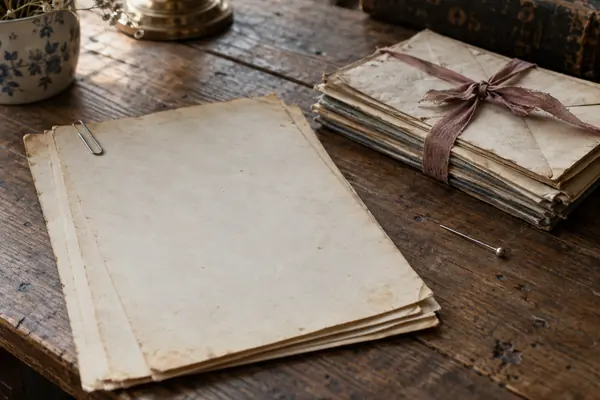
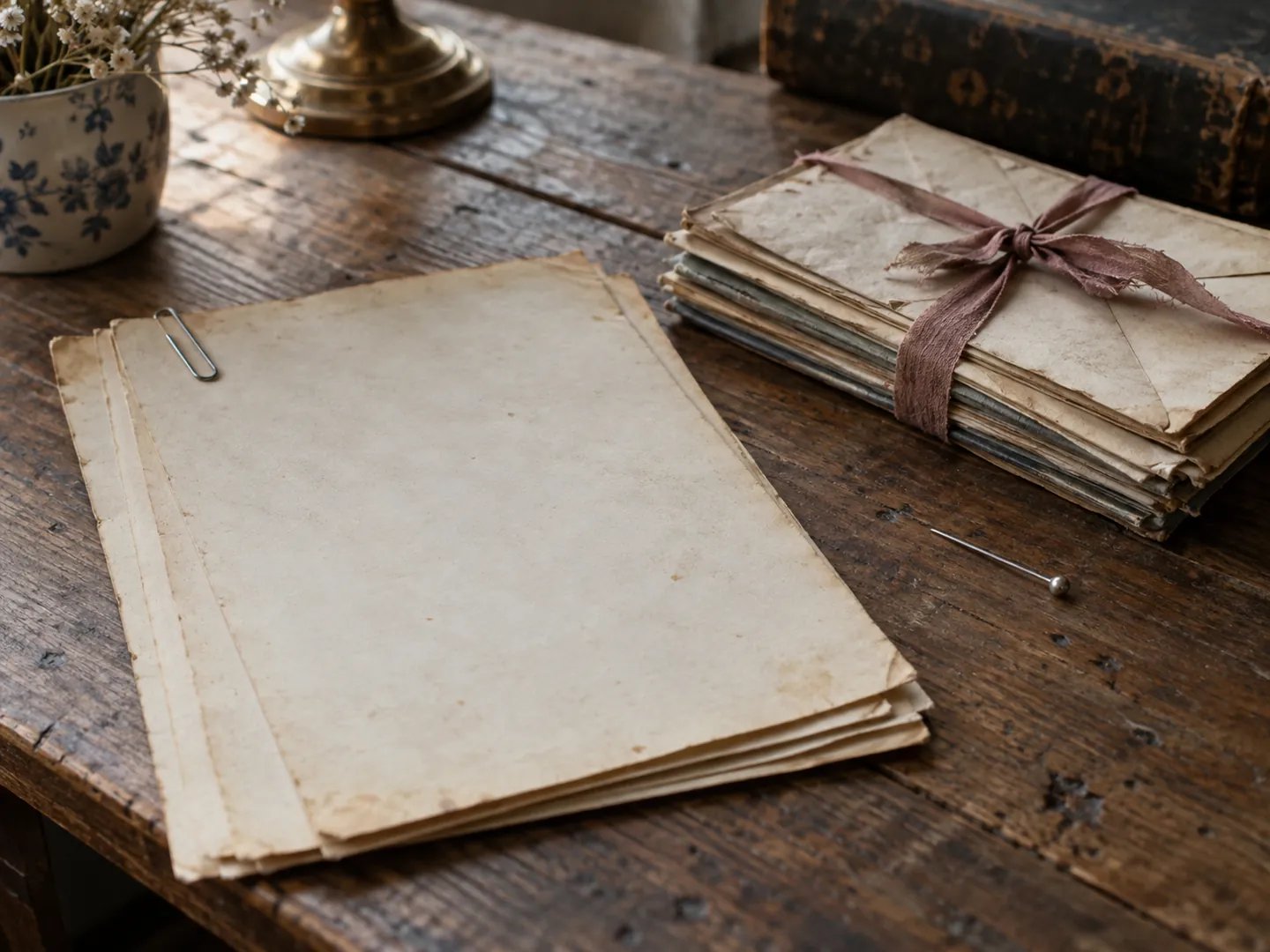
Until the 20th century, papers were usually bound with ribbon or string, and small stacks were held with a straight pin. Pins left holes; a spring of wire did not.
Walk the timeline doodleclip
Start
A SMALL HISTORY
The paper clip looks too simple to have a history.
It does. Before it, papers were tied with ribbon or string or held with a pin. Then came decades of patents, a famous misattribution, and one looped design that outlasted the rest.
GEMthe shape that stuck
Walk the timelineKeep in mind
THE SHORT ANSWER
The clip grew out of many patents.
The Gem shape won on everyday use.
BEFORE CLIPS
Until the 20th century, papers were usually bound with ribbon or string, and small stacks were held with a straight pin. Pins left holes; a spring of wire did not.
Walk the timelineTHE GEM
The Gem was on sale in the US by 1892 or 1893. It has one and a half loops and grips by the twist in the bent wire plus friction against the paper.
Why it worksMACHINES
In 1899 William Middlebrook patented a machine for making wire paper clips. Clips are still bent from steel wire by machine today.
See the numbersA QUICK TIMELINE
Pick a moment in the paper clip's story. The bar shows how far along it sits between the first bent-wire patent in 1867 and the Gem trademark in 1904.
Dates from the original US patents on Google Patents and the Early Office Museum's history of paper clips.
TWO NUMBERS WORTH KNOWING
One date for the first bent-wire patent,
one weight for an everyday clip.
1867
First bent-wire clip patent
Samuel B. Fay of Franklin, Pennsylvania, patented a wire ticket fastener in April 1867, mainly for attaching tickets to fine fabrics. Fay-design clips were not widely sold until the late 1890s.
FIRST PATENT · US 64,088
≈ 1 g
An ordinary metal paper clip
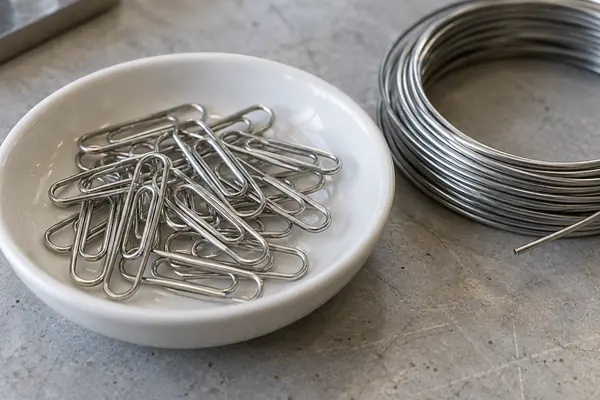
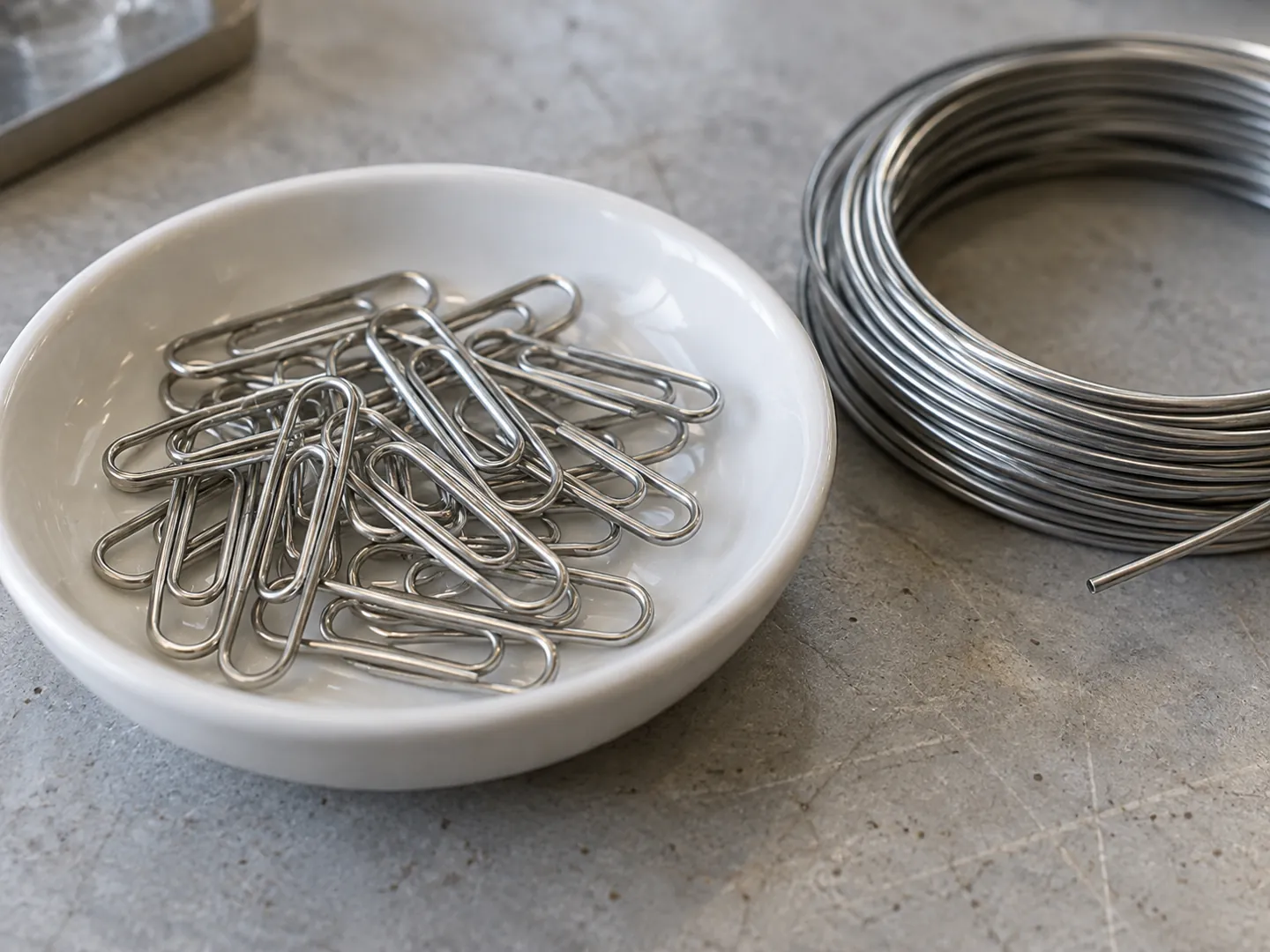
Most paper clips are steel wire, and a regular metal clip weighs about one gram.
WEIGHT · REFERENCE
Engineer and historian Henry Petroski found much late-19th-century experimenting with clip designs, which is why no single inventor can fairly claim the paper clip.
WHAT A GOOD CLIP MUST DO
Writing about the Gem, engineer John Lienhard lists what a good paper clip has to manage at once. Improving one of these often made another worse.
Step 1
Hold the sheets together without slipping off when the stack is handled.
Step 2
Slide over the paper without fuss and come away again just as easily.
Step 3
Avoid tearing the sheets or leaving rust marks behind.
Step 4
Be quick to make, not tangle in the box, and need no instructions.
WHY THE GEM WORKS
Push paper into a Gem and the two tongues of wire are forced apart. The bent wire resists that twist and springs back against the sheets, and friction between wire and paper holds them in place.
Lienhard calls the Gem a compromise rather than a perfect design: every change to grip, ease or cost tends to cost something else. One Gem maker reportedly received about ten improvement suggestions a month.
Questions
No single person. Samuel Fay patented a bent-wire ticket fastener in 1867, the Gem was on sale in the US by 1892 or 1893, and other designs were patented around the same time.
Johan Vaaler is often credited, but his US patent came in 1901, years after the Gem, and the Early Office Museum calls the credit mistaken. His clip shape was different from the Gem.
Gem was the name it was sold under. Cushman & Denison registered Gem as a US trademark for paper clips in 1904.
Most are steel wire, though other metals and moulded plastic are also used. A regular metal clip weighs about one gram.
A statue almost 7 metres high was put up in Sandvika in 1989 to honour Vaaler. It shows a Gem-type clip, not the design he patented.
Destination
Updated
ABOUT THIS NAME
doodleclip.com is part of the DoodleSale portfolio. It isn't in an auction right now, but you can ask about leasing it.